

To conclude this three-part interview series, we circle back with Renee Bracey Sherman, founder of We Testify and co-author of “Liberating Abortion: Claiming Our History, Sharing Our Stories, and Building the Reproductive Future We Deserve.” In light of the federal and state governments’ relentless attacks on our communities, Renee and Gretchen’s remarks on poverty as systemic oppression are crucial to our current understanding of the issues and the strategies we need to embrace to fight for our rights. ReproHub works across the diverse ecosystem of movement leaders, stakeholders and allies to address the most challenging issues of our time and shine light on those we admire who are unabashedly holding power to account and demanding better systems for the generations to come. We are deeply grateful to Gretchen and Renee for lending their voices to this shared goal and encourage you to follow them both as we navigate the weeks, months and years ahead in community together.
An Interview with Renee Bracey Sherman
Diane: I spoke recently with Gretchen Sisson about her work on adoption and poverty in the U.S. She mentioned that adoption promotion often comes down to whom society has deemed worthy of parenting. Can you talk about this from your perspective?
Renee: Who you are socialized to think is a bad parent, often lines up with money. It’s not for lack of trying or love. It’s simply because they don’t have material things. And why is it that material things take precedence? Or make you unqualified to be a parent? Lots of people believe that having money is the sign of being a good parent. And it’s socially acceptable to say that certain people aren’t good parents because they have less. Meanwhile, we know lots of rich people that are bad parents, some of them are running our government.
Diane: Can you talk about stigma and how it influences folks’ perception of abortion and abortion-seekers? What are some of the unhelpful things you hear people say about abortion?
Renee: Stigma is the air that we breathe, just like white supremacy. And it’s going to take us time to recognize how it influences each of us. I’ve heard people say, “Well, nobody really wants an abortion.” I mean, I did. But also, why do you feel the need to say that? I’ve also heard, “I support abortion, but I wouldn’t have one.” People who say these things don’t realize that they think they’re helping, but in this language, they’re saying harmful things. I also heard recently, “We should be increasing access to contraception and sex education so people don’t have to have abortions.” Why? Ask yourself why the reduction of abortions is your goal. There is no perfect number for however many abortions there will be; we will have as many abortions as we need. I think that everyone should have the contraception and care that they need, but having access to contraception is not going to change the need for abortion.
Fifty percent of people who have abortions were on some form of contraception the month they got pregnant. I was. People have abortions because they cannot continue a pregnancy, whether it’s medically, financially, or there is just no desire to. This idea, that it needs to be something that is reduced, is actually admitting that you feel abortion is somehow undesirable. When the abortion rate decreases, people often think it’s because there’s fewer people needing abortions. That assumption is completely based in stigma. If the abortion rate is decreasing, that means more people are not getting the care that they need. To me, if the number of abortions goes up, that’s a good thing because that means more people are getting the care that they need. We will always need to get as many abortions as we need.
Diane: A lot of folks are concerned right now about rising censorship and disinformation. Is there anything we can do to protect ourselves?
Renee: When you arm yourself with information, it becomes this shield where somebody cannot gaslight you, or, as we called it in the book, “abortionsplain” you. They can’t tell you misinformation or lies or disinformation because you already know what’s true. It’s harder to control you. Sharing information online is really important to help make sure people are getting the right information. Organizations and companies that share information about medication abortions are being censored by the big platforms so it’s really important that we share their content and help their information reach the audiences that it needs to reach. But also, the administration is taking information down off the internet. That’s part of the reason I decided to write a book because I noticed that, as outlets that I used to write for 10-15 years ago shut down, so did the things that I wrote, the archive of my work. A book is a way that you can have a physical thing that people can look at and read from and you can preserve the information. It’s why I believe you have to support Black and brown authors, feminist authors. So those books are on shelves, and people understand that this information is desired.
Diane: What is a piece of advice you have for folks in the pro-choice movement?
Renee: I think that people who consider themselves pro-choice don’t realize how uninformed they might be which makes them susceptible to misinformation, disinformation, lies, and confusion. You may care about an issue a lot, that doesn’t necessarily mean that you don’t have lots to learn. I’ve been doing abortion work for 15 years and, in the 5 years that I wrote my book Liberating Abortion, I was learning new stuff. Every day I learned new things. Even if you don’t have time to physically read a book, get an audio book, research something, watch a documentary, talk to your community. Things are always changing and we can humble ourselves to admit that will always have more to learn.
Diane: What are some recommendations you have for policy makers and funders who are working towards reproductive autonomy for all?
Renee: We need to do a better job of thinking about poor people. We used to have a poor people’s movement. We used to have a national organization for welfare. There were efforts to make sure that poverty was non-existent. If policymakers set their agenda based on making sure that people in poverty have the rights and the resources that they need to not only survive but thrive, without surveillance or fear of criminalization, then the rest of us will also benefit. But we shouldn’t be doing it just so that we benefit; we should be doing it because they are human beings, too, and they deserve to live their lives free from surveillance and fear of criminalization. I think at some point, we need to stop allowing Conservatives to cut taxes for the wealthy and cut services for poor folks in the name of “balancing the budget.” The foundations, major donors, philanthropists, they all have to stop allowing this. If we had a social safety net, we wouldn’t necessarily need all of this philanthropy to be able to do the work that we do. Because people would have a universal income. We’d have a national healthcare system. We’d have a fair tax base. We’d have food and housing. Philanthropists have to recognize that they are part of the system that actually makes our work harder. And we need to have a real conversation about how capitalism creates all of this or we’re never going to get to that future.
Diane: What do you most want for folks in this country, and what helps you envision a world where we’re liberated?
Renee: If we can liberate abortion, we can then liberate all of our bodies and all of our families. I believe this because if abortion is something that people can freely choose without being stigmatized or harassed or face barriers, that means that their bodies are respected. That they are able to make these decisions on their own, and not just to not have a child, but also to be able to choose to have children, knowing that “I’m actually fully choosing this because I have access to the other option.” In a full way, they get to step into deciding their future and if/when/how they build their family. I just think there’s something beautiful about that. And I think that if we can stop bothering each other’s bodies and show up as communities to support one another and our decisions, that will feel like such a liberated future, and a beautiful future.
Diane: What are some next steps folks can take to learn and provide support in their communities?
Renee: Wherever you live, go on INeedAnA and look up where your nearest abortion clinic is. Find your local abortion fund and donate to them. Find out what the resources are locally and share that information with folks in your community who need it. You can also read our book, or listen to the audiobook, Liberating Abortion: Claiming Our History, Sharing Our Stories, and Building a Reproductive Future We Deserve. My co-author, Regina Mahone and I also had an 8-episode podcast called The A Files: The Secret History of Abortion. It’s an easier, digestible audio version of all the information from the book and we have an episode at the end that’s “what do we do next?”
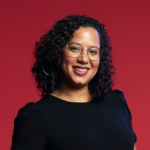
Renee Bracey Sherman is a reproductive justice activist, abortion storyteller, and writer. She founded We Testify, an organization dedicated to the leadership and representation of people who have abortions and share their stories at the intersection of race, class, and gender identity. She is also an executive producer of Ours to Tell, an award-winning documentary elevating the voices of people who’ve had abortions. In 2024, she and her co-author Regina Mahone released their debut book, LIBERATING ABORTION: Claiming Our History, Sharing Our Stories, and Building the Reproductive Future We Deserve and they are also the co-hosts of The A Files: A Secret History of Abortion, a podcast from The Meteor. She lives in Washington, DC.
Resources
National Network of Abortion Funds
The A Files: The Secret History of Abortion
INeedAnA
We Testify
LIBERATING ABORTION: Claiming Our History, Sharing Our Stories, and Building the Reproductive Future We Deserve